Seven Quiet Habits That Lift Your Club Match Play (And Cost Nothing)
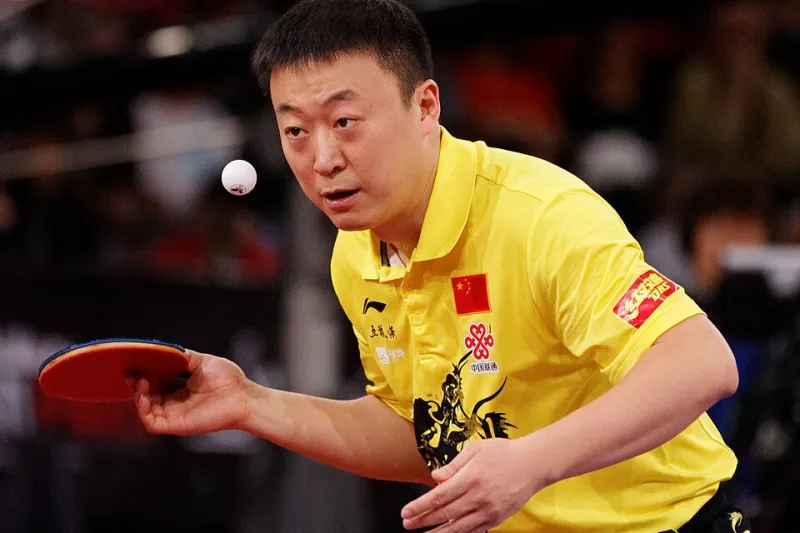
Photo: Pierre-Yves Beaudouin, CC BY-SA 3.0, via Wikimedia Commons
Most players who plateau in local league table tennis assume the answer is equipment. A faster blade, a tackier rubber, a new sheet of something imported. Then they buy it, play exactly the same way, and lose to the same people 11-8 in the fifth.
The truth, at club level, is duller and much more useful: the gap between an average N17 club-night player and a good one is usually routine. Not talent, not gear — routine. Here are seven habits that quietly move the needle, all of them free and all of them doable on two hours of club night a week.
1. Build a three-second pre-serve routine and never change it
Watch a strong club player serving under pressure and you'll see the same sequence every time: collect the ball, walk to the corner, bounce it twice, look at the opponent's bat, breathe out, serve.
That routine does two jobs. It gives your body a consistent starting position, which makes your serve more repeatable. And it gives your brain a job, which stops the what if I double-fault here monologue that ruins more service games than any opponent does.
Pick a routine. Practise it in practice matches. Then use it at 9-9 in the fifth, when you least feel like it.
2. Reset between points — properly, not just walking back
The ten seconds between points are the most wasted part of amateur table tennis. Most players either stand still staring at the floor or immediately start rehearsing the rally they just lost.
A deliberate reset looks like this: turn away from the table, take one slow breath out, wipe your hand on the towel, look at the rubber on your bat, then turn back and decide what you're doing on the next serve or receive. That's it. Six or seven seconds, every point, win or lose.
The point is to break the chain between one rally and the next. Players who carry a lost point into the next three points lose a lot of games 11-6 that should have been 11-9.
3. Warm up with a purpose, not just a knock
Most club-night warm-ups are five minutes of hitting the ball back to each other in the middle of the table. It feels nice and it achieves almost nothing.
Have a plan. Two minutes of forehand to forehand, but moving your feet and hitting to one spot. Two minutes of backhand. Then one minute of serve and receive — actual serves, not just feeding. That's a proper warm-up, and it's what you'd do if you had a coach standing next to you telling you off.
At the very least, finish the warm-up with two serves that you intend to use in the match. It's a strange feeling to walk into game one having not served properly all evening.
4. Count your unforced errors on the back of the scoresheet
You don't need an app or a spreadsheet. A tally mark on the corner of the scoresheet works fine: one mark for every point you lost by missing a ball you should have made.
Most club players are genuinely shocked the first time they do this. You'll typically find eight to twelve unforced errors in a five-game match — more than the margin of defeat in most of the games you lose. And you'll usually find they cluster in the same situations: the third-ball forehand, the backhand push against heavy backspin, the lazy return after a good serve.
Once you know where they come from, you can practise that specific shot for five minutes at the start of club night instead of just knocking up.
5. Practise the serve you're afraid of
Everyone has one. The reverse serve that goes into the net, the short serve that pops up, the long fast serve that only lands in practice. So it never gets used in a match, so it never gets better.
Give it ten serves at the end of every session. Just ten. Over a season that's a couple of thousand reps, and somewhere in there it becomes a shot you trust — which means it becomes a shot your opponent has to think about.
6. Recover to the middle after every shot
This is the least glamorous habit on the list and probably the most valuable. After you play a shot, move back towards the middle of the table before your opponent hits theirs. Not a sprint — a step and a reset.
Most club-level points are lost because a player hits a good forehand, stays where they are admiring it, and then gets beaten down the backhand side. The recovery step is the difference between a good shot and a good point.
7. End the session on something you did well
Amateur players tend to finish club night with whatever happens to be last — usually a scrappy game against someone who's already putting their coat on.
Take five minutes instead. Play one short game to eleven where you only count the things you've been working on. Serve with your routine, reset between points, recover to the middle. If it goes badly, play another one. Finish on a rally you're happy with, not on a miss.
None of this is exciting — that's the point
You won't notice any of these seven habits changing your game in a week. You'll notice in about three months, when the player who used to beat you 11-7, 11-7 is suddenly losing the fifth game 11-9 and can't work out why.
That's the whole trick. Equipment gives you a jump for a fortnight. Routine gives you a slope that keeps going up. And in a club night with limited practice time, the slope is the only thing worth chasing.