Soft Hands in a Cold Hall: Seven Touch Drills for N17 Winter Club Nights
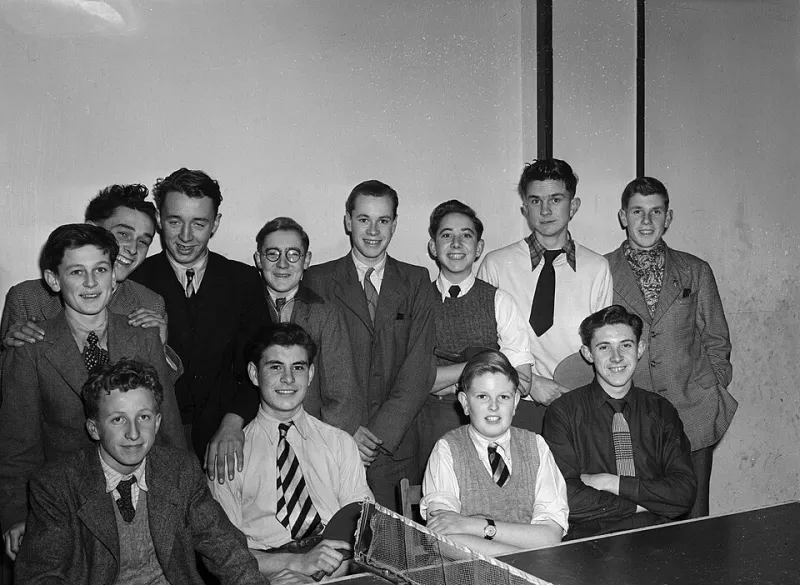
Photo: Geoff Charles, CC BY-SA 4.0, via Wikimedia Commons
The hall takes about forty minutes to lose its chill. Lights on at seven, radiators ticking, and for the first half hour the ball feels heavier than it should and everybody's hands are half a beat slow. If you have shivered your way through an opening game in November, you already know what that does to your touch: pushes float long, blocks fly off the end, and serves turn into a lottery.
Touch is the first thing to desert you in winter, and it is the last thing anyone bothers to practise. So this is the menu we have settled on at club nights in N17 — seven drills that need a table, a bat each, a handful of balls and something to aim at. Nothing here requires a robot, a coach with a megaphone or a second mortgage. Slot them into a normal session, five minutes each, and you will feel the difference by the second cup of tea.
Before You Touch a Ball: Five Minutes for Cold Hands
None of these drills work if your fingers are still stiff from the walk up from Bruce Grove. Get the hands and feet going first:
- Squeeze a ball thirty times in each hand, then spread the fingers wide and repeat.
- Wrist circles, both directions, twenty each.
- Balance a ball on the flat of your bat and walk a lap of the hall. Drop it, start again.
- Twenty shadow forehands and twenty shadow backhands, nice and loose, no power.
- Side-steps along the length of the table, three sets of twenty seconds, staying low.
- Keep a hand warmer in the bag and drink something warm before your first game. Sounds soft. Works anyway.
Drill 1 — Wall Taps and the Thirty-Second Bounce
Find a bare bit of wall away from the tables. Thirty gentle forehand taps from a metre back, then thirty on the backhand, keeping the bat still and letting the ball come to you. Follow it with thirty seconds of bouncing the ball on the bat face, counting out loud.
Beginner version: twenty taps, and bouncing on the bat is allowed to be messy. League version: alternate one bounce on the bat face, one on the edge, thirty seconds without a miss.
Drill 2 — The Two-Bounce Forehand
Rally cooperatively, but the ball must bounce once on your own side before it crosses the net and still land on the table. That second bounce is the whole point: it forces soft contact and an upward brush rather than a flat swat.
Beginner version: count how many in a row you can manage. Ten is a good night. League version: the feeder calls “one” or “two” as they feed, and you have to switch between a normal one-bounce loop and the two-bounce version on command. Brutal, and brilliant for the short game.
Drill 3 — Towel Targets and Short Serves
Fold a towel and lay it on your partner's forehand side, close to the net. Twenty serves, and you count only the ones that land on or beside the towel and stay short. No spin needed at first — placement first, spin later.
Beginner version: any serve that lands short and low scores a point. League version: same serve three times to three different placements, then a serve that bounces twice on the receiver's side. Ten of each, and no freebies.
Drill 4 — The Cooperative Push Ladder
Push to push down one diagonal, no attacking, and count the rally. Aim for the table, not the winner. Write your number down — the ladder only works if you know where you started.
Beginner version: target eight pushes without a miss, then ten. League version: switch diagonals every six pushes without breaking the rally, then add a placed push into the towel target every fourth ball.
Drill 5 — Block and Shuffle
One player blocks close to the table, the other feeds at random to forehand and backhand at a steady, unspectacular pace. Forty-five seconds on, forty-five off, four rounds. The blocker's job is soft hands and a quick reset of the feet — not hitting winners.
Beginner version: feeder calls the side before they play, so the blocker can pre-move. League version: feeder hides the ball behind the table edge and varies the pace, not just the placement.
Drill 6 — No-Attack Points
Play games to seven where a smash or a full-blooded loop is an automatic point against you. You can only score through placement, spin, or your opponent's error. Suddenly the short game matters, and suddenly everyone is thinking about where the ball is going rather than how hard.
Beginner version: normal scoring, but the game restarts if anyone wins a point with a smash. League version: points to eleven, and the receiver must serve short at least once in every three serves.
Drill 7 — Two-Thirds Pace Serve and Third Ball
Serve at roughly seventy per cent effort and follow up with a third ball at the same pace, no winners allowed. The goal is spin quality and a deliberate placement on the third ball — the corner, the elbow, the wide forehand. Winter is not the season for red-lining your arm; it is the season for grooving decisions.
Fitting It Into a Normal Wednesday
Eight players, two tables, forty minutes. Pair up, five minutes per drill, rotate the pairs after each one so nobody spends the night with the same feeder. Drills 1 and 2 can run off-table while the first pair warms up, which keeps the hall from feeling like a queue at the post office.
If you only have twenty minutes, do drills 2, 4 and 6. That trio covers contact, patience and the short game, which is most of what winter steals from you.
What to Change in January
Once the hall warms up and the league fixtures pile in, drop the two-bounce work to once a fortnight and add live serve-and-attack points instead. The towel targets stay — they are the cheapest coach we have ever hired.
Bring a spare ball, bring a hand warmer, and be kind to the person who has clearly not played since September. That is usually all the coaching anyone needs in N17 in November.