Four Sensible Bats for the Step Up to Club Play (and One You Should Not Buy)
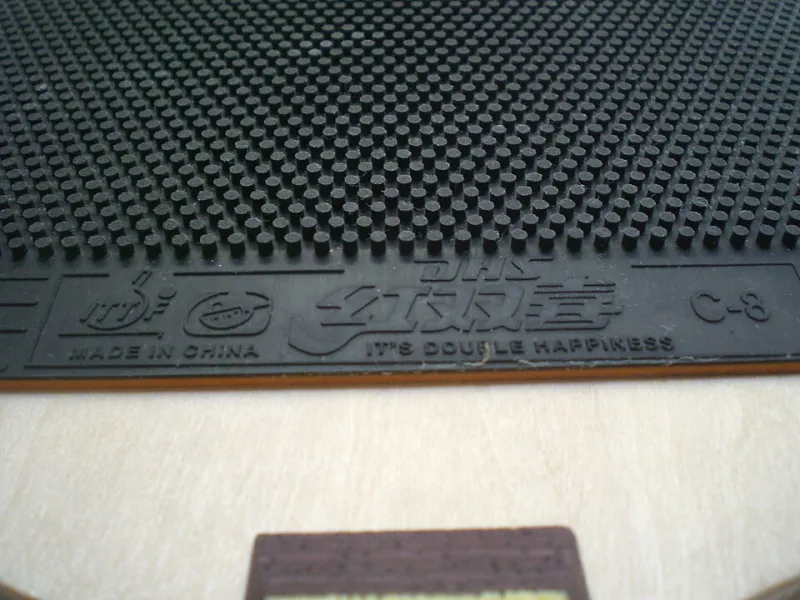
Photo: PGYF, Public domain, via Wikimedia Commons
There is a moment in every club player's life when the bat from the sports shop stops being enough. It is usually a Tuesday. The rubber has gone shiny, the ball will not stay on the table, and someone has told you that a proper bat is the answer.
They are right, broadly. But a “proper bat” is not the same as an expensive one, and the gap between the two has never been wider. Prices below are approximate and move about — check before you buy — but the advice holds.
Why a First Custom Bat Goes Wrong
The standard mistake is buying speed. A fast carbon blade with springy rubbers will do a wonderful job of hitting the ball back when you make a decent contact and a terrible job of telling you when you have not. Beginners learn from feedback: the bat should reward a good stroke and punish a sloppy one in a way you can feel. Equipment that fires the ball regardless of what your arm did is teaching you nothing, and it is doing it at £150.
So everything below is chosen with one question in mind: does this bat help somebody learn, and does it still have something to offer in twelve months?
1. The Absolute Beginner's Bargain: A Friendship 729 Premade (roughly £25–£35)
Tacky Chinese rubbers on a slow allround wood. It is not glamorous, the handle is chunkier than you would like, and the ball will not fly anywhere in a hurry.
Who it suits: juniors starting out, adults returning after twenty years, anyone on a tight budget who wants to learn to brush the ball rather than slap it. The tackiness makes spin feel obvious, which is a genuine teaching gift.
Watch out for: weight. Some of these arrive heavier than a club-level blade and a small eight-year-old will notice. If that is your player, go to option two.
2. The Safest First Bat: A Palio Premade (roughly £35–£45)
Palio's ready-made bats are the ones we hand out most often on club nights, and there is a reason. A soft, forgiving sponge, an allround wood blade, sensible weight, and enough control that a beginner can rally within twenty minutes.
Who it suits: the classic club-night adult, playing once or twice a week, who wants to learn the basics without thinking about equipment at all.
Watch out for: it will feel slow by month eight if you improve quickly. That is a good problem, and it means you will know what you want next.
3. The Improver's Custom Build: Allround Wood Blade with Two Controlled Rubbers (roughly £65–£80)
Something like an allround five-ply wood blade — Yinhe and Sanwei both make well-priced options — paired with a classic Chinese forehand rubber and a softer, more forgiving backhand rubber. Add glue, edge tape and a bat cover and you are still under the price of a mid-range premade.
Who it suits: players a year in, who have a decent forehand and a backhand they are still negotiating with. This is the setup that will carry most people to a respectable league standard and stay useful for several seasons.
Watch out for: assembly. If you have never glued a rubber, buy from a UK retailer who will assemble it for you, or ask someone at the club. Air bubbles are the enemy of a cheap build.
4. The Buy-It-Once Option: Yasaka Sweden Extra with Mark V (roughly £100–£115)
A classic allround blade with a classic rubber, both of which have been around so long that nobody needs to be convinced. Control first, plenty of spin, and it will still be a sensible bat in three years' time.
Who it suits: adults with decent hand-eye coordination who play twice a week or more and intend to keep going. Also a good shout for a strong junior moving into the under-16s.
Watch out for: the price is real, and the rubbers will need replacing in a year or so — budget for that from the start rather than being surprised by it.
The One We Would Talk You Out Of
A £130-plus carbon blade with top-end tensor rubbers on both sides, bought for an eleven-year-old or for an adult's first club season. We see it every few weeks. The bat is lovely. The player cannot keep the ball on the table, so they learn to hit softer and softer, and the technique gets worse, not better. Replacement rubbers alone will cost more than any bat on this list.
If somebody in your household is desperate for the fancy one, wait a year. It will still be there, and it will be worth more to you then.
Small Things Worth Getting Right
- Handle type: shakehands is standard; try flared and straight before committing. A handle that does not fit will ruin an otherwise fine bat.
- Weight: under 85g is comfortable for most juniors; adults can go slightly heavier.
- A bat cover and edge tape cost a fiver and save the rubber edges from the bottom of a kit bag.
- Buy UK where you can. A retailer who will assemble, advise and take a return is worth a few pounds over the cheapest import, particularly for a first custom bat.
When to Upgrade
When the bat is the thing holding you back, not your footwork. In our experience that is rarely before the second season, and sometimes not then. Borrow a clubmate's bat for ten minutes first. It is free, and it is a much better teacher than a video advert.